A scone has a short window. Pulled from the oven and rested for ten minutes, it is tender, faintly warm, and better than almost anything else on the table. Two hours later it is still good, but it is a different thing entirely. The gap between a nice bake and a proper tea table comes down to three decisions: when you serve it, how you open it, and what goes on first. All three take seconds. All three are easy to get wrong.
Serve Them Warm, Not Hot
Straight from the oven is too early. A scone needs ten to fifteen minutes on a cooling rack so the steam inside can escape. Cut into one while it is still hot and the crumb turns gummy and heavy, and the middle keeps cooking in a way you cannot undo.
The sweet spot is warm to the touch, a comfortable hand temperature. Warmth does two things: it softens butter on contact and it releases the smell of the bake, which is half the pleasure. Heat does something else. It collapses cream.
Here is the practical trade-off. If you are serving with butter alone, go as warm as you dare. If clotted cream is involved, let the scones come down to just-warm or even room temperature. Clotted cream is thick and slow; on a hot scone it turns to liquid and slides off the moment you lift the half. Plenty of people quietly prefer a cooled scone for exactly this reason, and nobody at the table will complain.
Reviving a Scone That Has Gone Cool
Scones are at their best the day they are made, but a cooled one is not a loss.
- Oven: 150°C (300°F) for five to eight minutes, loosely wrapped in foil. This brings back the crust without drying the middle.
- Dry pan: split the scone first, then toast the cut faces in a dry frying pan for a minute or two. Excellent with butter and cheese.
- Microwave: ten to fifteen seconds, no more. It softens the crumb acceptably for about a minute, then turns it rubbery. Use this only when you are eating immediately.
What you should not do is wrap warm scones tightly in plastic or seal them in a tin while they are still hot. The trapped steam softens the crust and makes the crumb sticky. Cloth, a tea towel, or paper first; airtight only once fully cool.
How to Split a Scone
Do not cut a scone the way you cut a sandwich. A knife sawed horizontally compresses the crumb and leaves two flat, pasty faces. It also makes a mess of a fragile bake. The goal is to break it, along the line it already wants to open.
- Let the scone cool enough to handle. Warm is fine, hot is not.
- Hold it in both hands with your thumbs meeting at the middle, at the faint seam where the dough was folded.
- Press your thumbs gently into that seam and prize the scone apart, working your way around the circumference a little at a time.
- If it resists, use a fork: slide the tines in horizontally at the equator at three or four points around, then lever the halves apart. A knife used only to score the equator, about a centimetre deep all the way round, followed by a hand-pull, also works well.
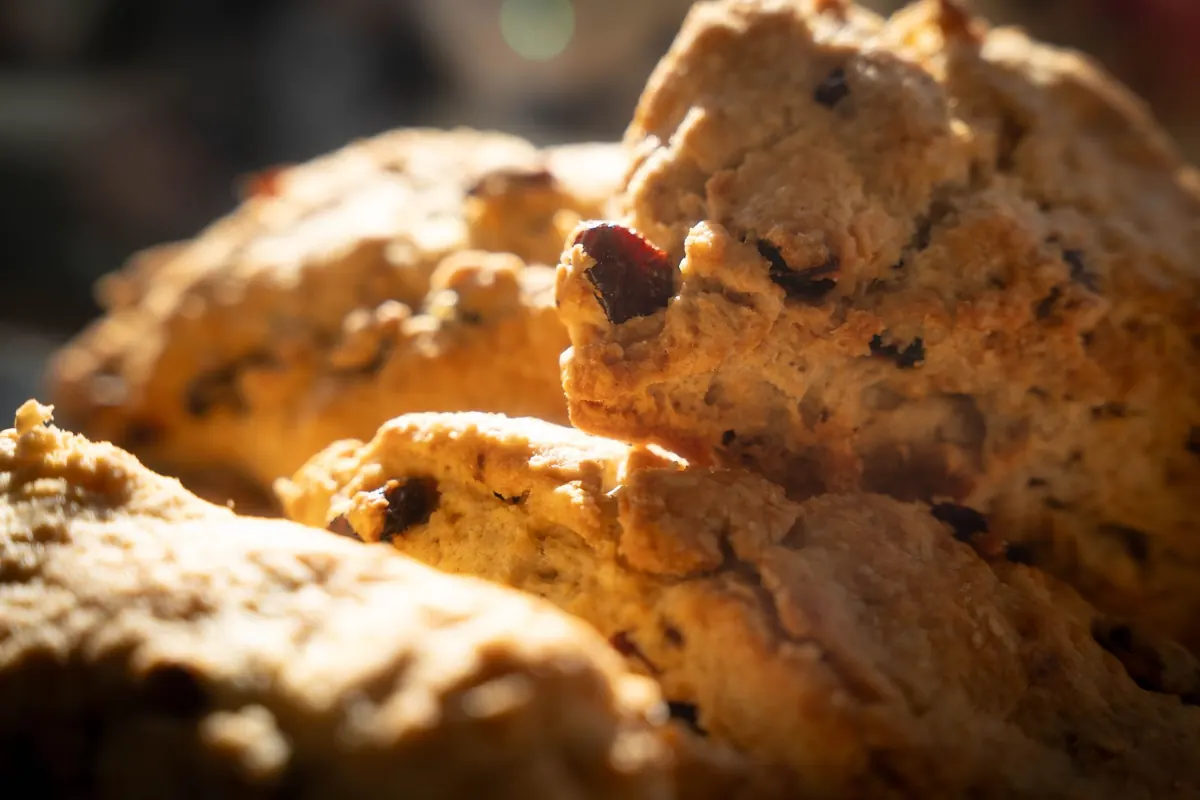
You should end up with two craggy halves and a small shower of crumbs. That rough surface is the point. It gives cream and jam something to cling to, instead of a smooth face for them to slide across.
Jam First or Cream First?
This is the argument that never ends, and the honest answer is that both orders are traditional depending on which county you are standing in. In Cornwall, jam goes on first and cream on top. In Devon, cream goes first and jam follows. Neither is wrong.
There is a practical logic worth knowing, though. Clotted cream is stiff and dense, so it behaves better with something underneath it: jam first, then a generous spoon of cream. Whipped cream, or a looser cream you spoon rather than spread, needs the opposite. A base of cream, then jam over the top. Match the order to the texture in the pot and the scone will hold together in your hand.
What genuinely matters is smaller than the debate. Put out two spoons. Jam in the cream pot, or cream in the jam jar, is the one thing everyone at the table will notice.
Setting the Table
A scone spread works best when it is simple and slightly generous.
- Scones piled in a cloth-lined basket or on a plate, loosely covered with a tea towel to hold the warmth.
- Butter at room temperature, in a small dish or thin curls. Cold butter tears a scone apart.
- One clean knife for the butter, a teaspoon for the jam, and a second spoon for the cream.
- Plates with room to work. A tiny plate guarantees a lap full of crumbs.
- A pot of strong black tea, poured before the scones arrive rather than after.
Toppings Beyond Cream and Jam
Cream and jam earn their reputation, but there is room on the plate for more.
- Lemon curd on a plain or blueberry scone, with thick yogurt instead of cream.
- Honey, especially with a wholemeal or oat scone, and butter underneath.
- Crème fraîche with a light pinch of sugar, for when clotted cream is not in the house.
- Mascarpone with sliced strawberries on a plain scone in summer.
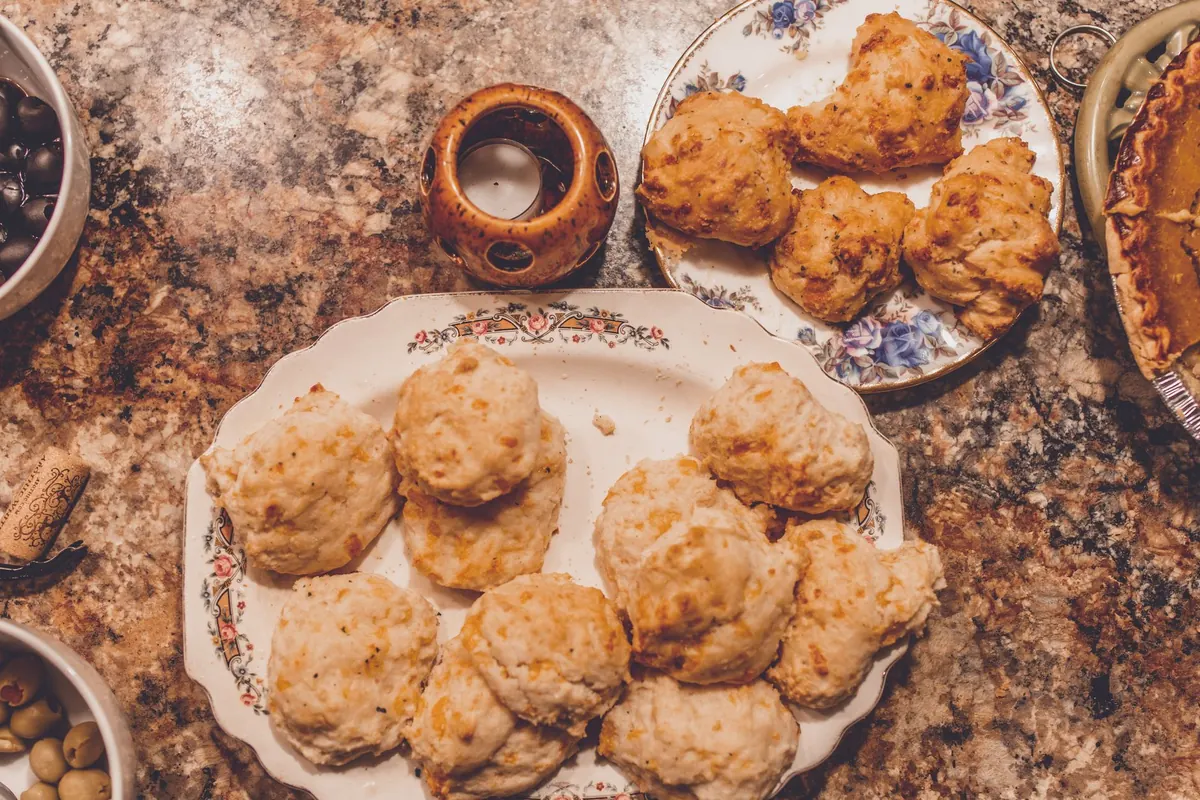
- Savoury scones: cheese scones split and buttered, with chutney, a slice of ham, or cream cheese and black pepper.
Warm spice scones — cinnamon, nutmeg, a little ginger — take apple butter or stewed fruit better than they take jam.
The Only Three Rules That Matter
Serve them the day you bake them, warm rather than hot. Break them apart instead of sawing through them, and leave the rough side facing up so the toppings have somewhere to sit. Put out two spoons and let everyone else argue about which county is right. The scone itself does not care. It only wants to be eaten soon, in good company, with the butter already soft.
Photo: jiyeong_22 / Pixabay