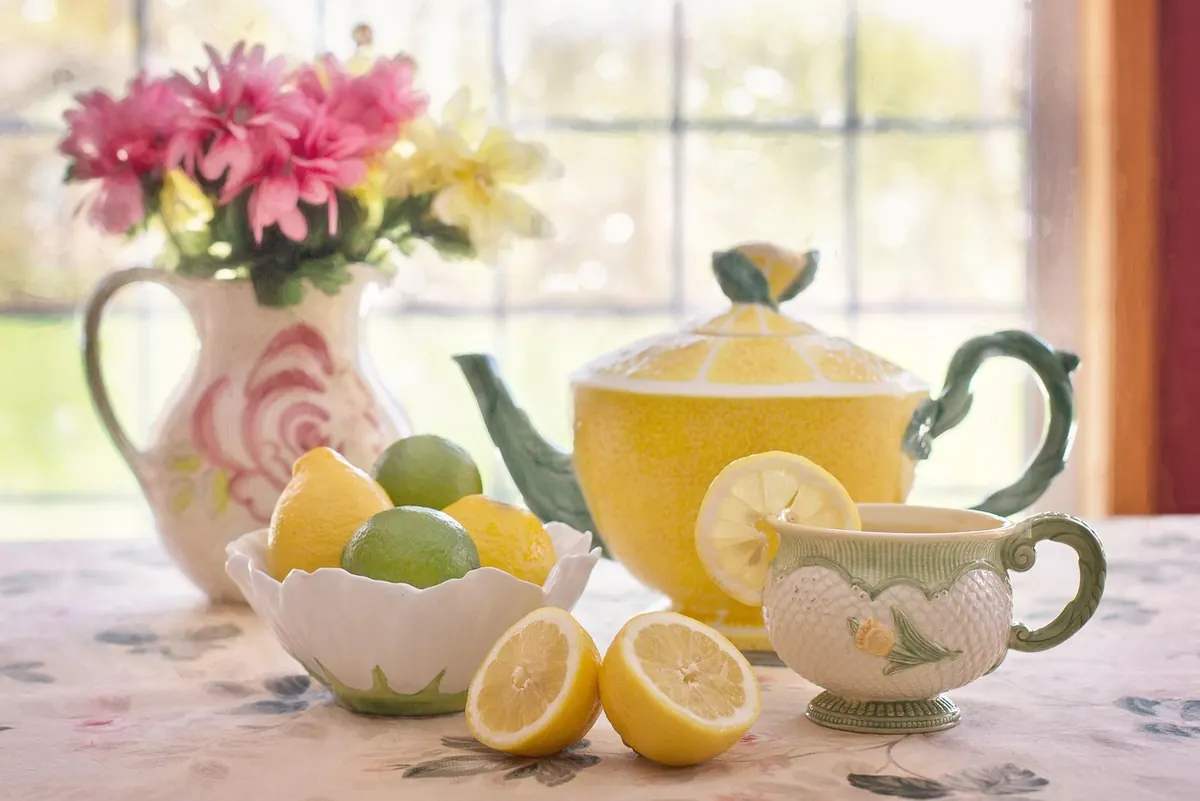
The scone course is where afternoon tea either earns its reputation or quietly loses it. Everything before it — the sandwiches, the china, the pot of tea going slightly stewy — gets forgiven if the scones arrive warm, the cream is thick enough to hold a spoon upright, and the jam tastes of fruit rather than sugar. What follows is a checklist, not a ceremony. Work through it once and the whole course becomes easy to repeat.
Start With the Scone Itself
Everything else on the table is a supporting actor. If the scone is dry, bouncy or cold, no amount of good jam will rescue the plate.
Bake them the same day. If that isn't possible, freeze the cut rounds unbaked and bake straight from frozen, adding a couple of minutes to the time. Reheat day-old scones for six to eight minutes in a moderate oven, wrapped loosely in foil, then unwrap for the last two minutes so the crust crisps. Serve them warm, not hot — cream melts into a puddle on a scone straight from the oven.
Keep them small. A five to six centimetre cutter gives a scone you can eat in three bites. Oversized scones look generous and then sit half-eaten on the plate.
Split, don't saw. Cut horizontally about two-thirds of the way up, or simply pull the scone apart with your fingers along its natural seam. A knife dragged back and forth compresses the crumb into something closer to plaster.
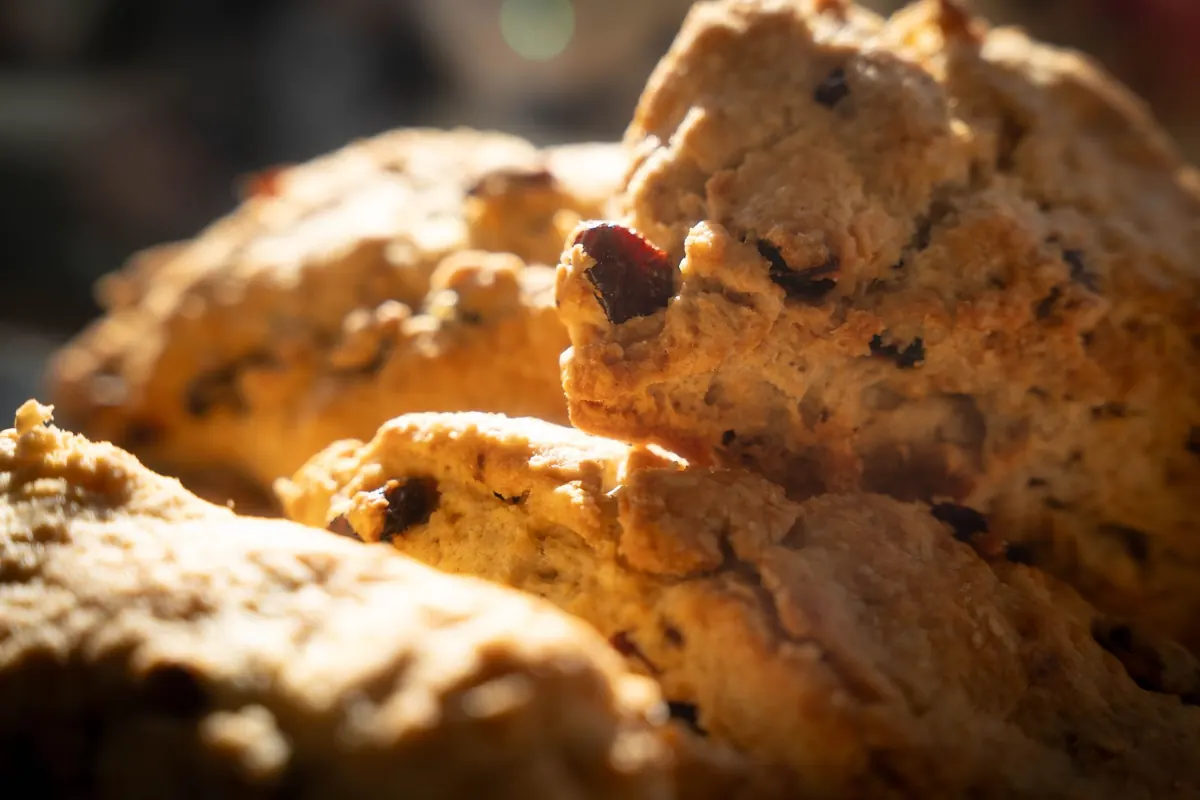
Plain scones are the honest test of a baker. Fruit scones — sultanas, raisins, a few cherries — are lovely, but keep the fruit modest. Too much and the scone turns sweet enough to fight the jam.
The Cream Question
Clotted cream is the standard, and it is not the same thing as whipped cream. It is cooked rather than whipped, which is why it sits on a scone like a soft, faintly nutty butter instead of dissolving into it. If you cannot find it, double cream whipped only until it barely holds a trail from the whisk is the closest substitute. Stop well before stiff peaks. Aerosol cream, cream cheese and plain butter are not substitutes, however much you like them on other things.
How much, and how cold
Take the cream out of the fridge fifteen or twenty minutes before serving. Ice-cold cream tears the surface of the scone and tastes of nothing. A generous tablespoon per half is right for most people — enough to sit as a cushion, not a smear. Put it in a small dish with its own spoon so nobody is dipping a butter knife into the pot.
Jam That Earns Its Place
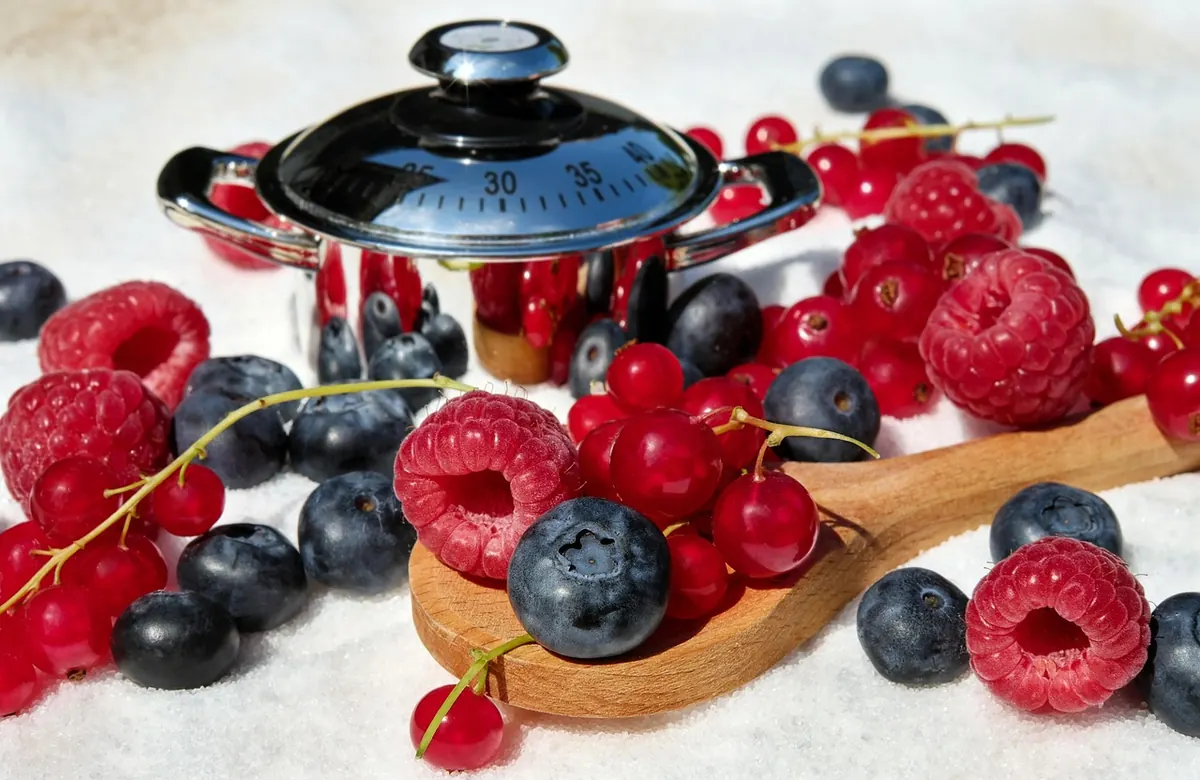
Raspberry and strawberry are the classics for good reason, but blackcurrant, damson, apricot and cherry all work. What matters is that the jam tastes primarily of fruit. Look for a high fruit content, a set soft enough to spoon, and pieces small enough not to slide off the scone. If yours has been in the fridge, loosen it with ten seconds in a warm place — a jam you have to excavate with a knife is a jam that will shred your scone.
One or two jams is plenty. Raspberry and apricot side by side give contrast without turning the table into a preserve counter. Anything labelled "spreadable" or "no added sugar" tends to taste of pectin and sweetener, and the scone deserves better.
Cream or Jam First?
Devon puts cream down first and jam on top; Cornwall does the reverse. Neither is wrong, and the argument is half the pleasure of the course. If you want a practical rule:
Jam first keeps the layers distinct under a thick clotted cream. Cream first softens the crumb and makes the whole thing easier to eat in two bites.
Pick one, say which you've chosen, and let guests do as they please. Nobody has ever left an afternoon tea disappointed because the order was wrong.
The Table Checklist
- Warm scones in a napkin-lined basket or on a plate, covered so they stay warm.
- Clotted cream in a small dish, with a spoon, taken out of the fridge ahead of time.
- Jam in a small pot with its own spoon — never the jar with the family knife in it.
- Unsalted butter at room temperature, for anyone who wants it plain.
- Small plates per person, and a side plate for the cream and jam if you are serving components separately.
- Small round-bladed knives, one per guest, plus napkins — scones are eaten with fingers.
- Tea: a pot, a jug of milk, sugar, and a strainer or a basket if you're brewing loose leaf.
- A time plan: sandwiches first, scones next, cakes and pastries after.
The timing matters more than the equipment. Scones should come out of the oven roughly as guests sit down, and the tea should be fresh-brewed rather than stewed through the sandwich course.
Assembling and Serving Without Fuss
For a group, serve the scones, cream and jam separately and let everyone build their own. It keeps preferences honest and stops the cream dish from becoming a crumb-filled wreck. For two people, or for a more formal setting, dressing the scones in the kitchen and bringing them out ready is tidier and faster.
Either way, hold the scone gently — squeezing it flat is the fastest way to make it crumble. Load each half with cream and jam, then eat it in two or three bites. A knife is for loading, not for cutting at the table.
What to pour alongside
A brisk Assam or English Breakfast stands up well to plain scones with cream. Darjeeling or a light oolong suits fruit scones better. Earl Grey works, though the bergamot can elbow the jam out of the way. Brew black tea with water just off the boil and don't let the leaves sit in the pot past four or five minutes.
A Short Practice Run
Before you serve scones to anyone you want to impress, bake one batch for yourself. Taste one plain, one with cream only, one with jam only, and one fully dressed. Notice where it falls short — a little dry, a little sweet, a little heavy — and change one thing next time. Keep a note of the flour you used, how much liquid went in, and how long they baked. Three or four batches in, you'll have a scone you can make without thinking, and an afternoon tea course that holds up on its own.
Photo: JillWellington / Pixabay